


Nature Journaling:
Discover the World Around You
Look closely. Wonder deeply.
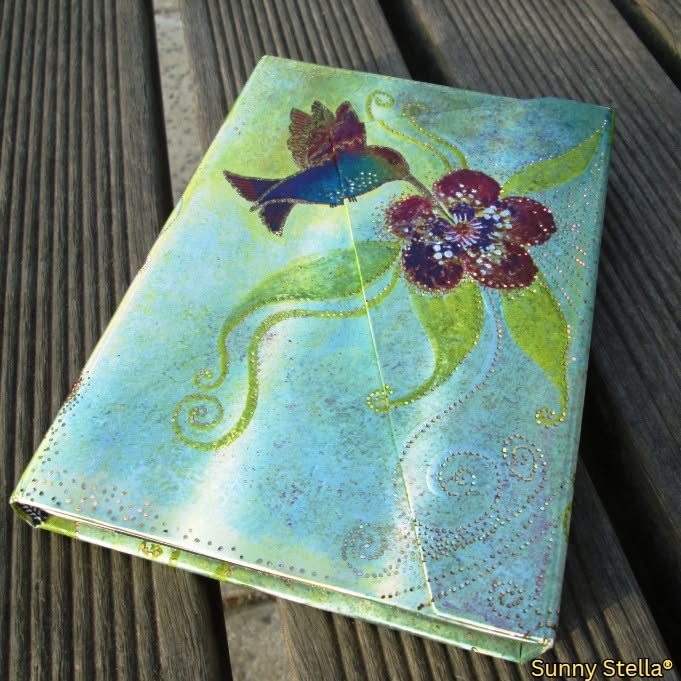
Have you ever stopped to watch a bird and wondered what it was doing? Perhaps you’ve noticed something growing in your yard that wasn’t there a week ago, or wondered why certain birds visit your feeder at different times of the year. These everyday observations are where nature journaling begins.
Nature journaling encourages us to slow down and pay closer attention to the natural world. We record what we notice through words, sketches, numbers, or whatever works best for us. Sometimes our observations help us answer questions. Other times, we discover something unexpected that makes us want to investigate further.
You don’t have to be an artist to keep a nature journal, and you certainly don’t need expensive supplies. A notebook, a piece of scrap paper, or even a piece of wood can become your journal. You can use a pencil, marker, crayon, or experiment with natural materials such as berries and leaves that leave a mark.
The wonderful thing about nature journaling is that no two people experience it quite the same way. Something that catches one person’s attention might go completely unnoticed by someone else. That’s part of what makes sharing our observations with others so interesting.
Over the years, I’ve had many opportunities to see this firsthand. I began teaching people to observe nature in the late 1980s and expanded into teaching nature journaling in the early 1990s. I continue to enjoy seeing what happens when people begin observing their surroundings more carefully. During a class I taught in June 2026, participants explored the same garden area but chose entirely different subjects to observe. One watched a raven perched on a utility pole, while others studied flowers and plants growing nearby.
What I enjoyed most was our discussion afterward. Each person had noticed something different, and as they shared their observations, everyone had an opportunity to learn something new.
Nature journaling doesn’t have to take place outdoors. If extreme weather, limited mobility, or other circumstances make outdoor activities difficult, you can still observe nature from a window or explore natural objects indoors. Your available space doesn’t have to determine how much you can discover.
Through Sunny Stella® World, I want to help adults develop their own nature journaling skills while also learning how to share these experiences with children. Whether you’re a parent, grandparent, educator, or someone interested in exploring nature for yourself, you’re welcome here.
Learning Through Observation
Nature journaling is much more than keeping a record of what we see outdoors. It’s an opportunity to explore our surroundings, follow our curiosity, and begin making connections between what we observe and what we already know.
When I introduce nature journaling to learners, I encourage them to begin with something that catches their attention. It might be an insect moving across a leaf or the changing shape of a cloud. Rather than immediately identifying the subject or explaining what’s happening, we spend time observing it. What do we actually see? What do we hear? What do we smell? What does it feel like? What questions come to mind?
My approach has grown from practice, reflection, and learning with others. I invite learners to slow down and notice, to wonder, to make connections, and to reflect on what they understand. Some educators use the prompts I Notice, I Wonder, and It Reminds Me Of. I use those as well, along with I Understand, to support reflection.
I Notice … What do I see, hear, smell, or feel? What details stand out?
I Wonder … What questions do I have about what I’m observing? What would I like to investigate further?
It Reminds Me Of … Does this bring to mind something I’ve seen or experienced before? What connections can I make?
I Understand … What am I beginning to understand from my observations? Has something changed in the way I think about my subject?
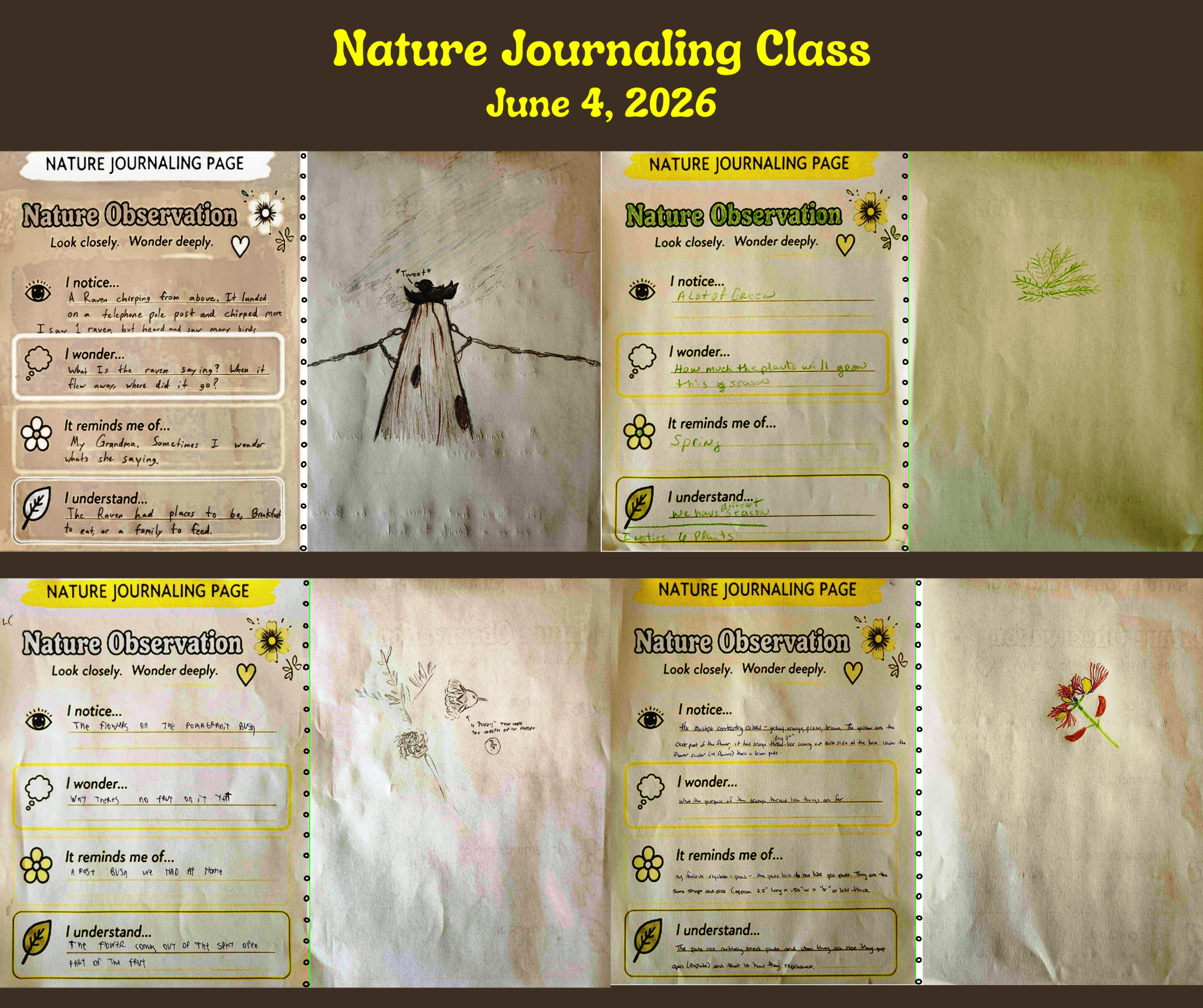
These prompts provide a starting point, but they’re not meant to limit anyone’s curiosity. A learner might spend an entire session observing one small detail and filling a page with questions. Someone else might prefer to sketch what they see, adding labels or measurements as they go.
Sometimes the most interesting discoveries happen when we return to the same subject over time. A plant that appeared unchanged yesterday may have a new leaf today. Birds may behave differently as the seasons change. Recording these observations helps us recognize patterns we might otherwise miss.
And we don’t always have to know the answers. Learning to ask thoughtful questions and becoming comfortable with uncertainty are important parts of scientific inquiry. Nature journaling gives us a place to explore those questions, revisit our earlier thinking, and record what we discover along the way.
Nature Journaling for Everyone
Nature is all around us, but not everyone has the same opportunities to explore it. Some people have access to gardens, parks, and nature trails, while others live in apartments or spend much of their time indoors. Weather can also make outdoor activities difficult or unsafe, especially during periods of extreme heat or cold. That doesn’t mean nature journaling has to stop.
If you’re unable to go outdoors, consider observing the changes taking place just outside your window. You might notice how shadows move throughout the day or how a tree changes with the seasons. Even a single houseplant can provide opportunities to observe new growth and ask questions about what might be happening.
For adults introducing nature journaling to children, the experience doesn’t have to become another complicated lesson. Children are naturally curious, and sometimes the best thing we can do is give them time to explore what interests them. Rather than providing all the answers, we can encourage them to look more closely and share what they’re thinking.
The same approach works with adults. Some people are comfortable sketching. Some like to make nature dioramas, while others prefer writing descriptions or recording measurements. There is room for different ways of participating, and no one should feel pressured to produce a perfect journal page.
This philosophy is also reflected in my GROW ANYWHERE SYSTEM®, which encourages people to redefine their available space and work within their abilities. The same principles apply to nature journaling. We begin with what we have available and adapt our experiences to our surroundings, rather than allowing our circumstances to determine whether we can participate.
What matters is having the opportunity to participate. Nature journaling should be something people can enjoy and continue exploring in ways that make sense for their lives.
Monthly Nature Journaling Gatherings on Zoom ~ They’re FREE
Have you ever wanted to try nature journaling but weren’t quite sure where to begin? Perhaps you’ve already started and would enjoy learning alongside others who share your interest in the natural world.

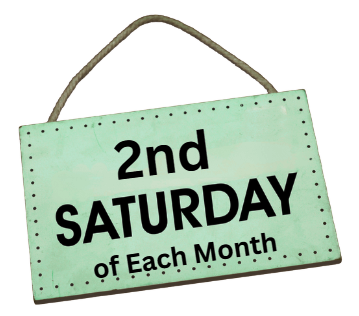
Beginning January 9, 2027, I’ll be hosting Free monthly nature journaling gatherings on Zoom. We’ll meet on the second Saturday of each month at 12:00 noon Mountain Standard Time (MST). Meetings will last 30 – 40 minutes.
These gatherings are for adults who want to develop their own nature journaling practice, including parents, grandparents, and educators interested in sharing what they learn with children. They’re also an opportunity for adults who are homebound or unable to spend much time outdoors to participate in a nature journaling community.
Each month, we’ll explore a different topic or observation skill. I’ll demonstrate ways to approach the activity, and you’ll have time to try it yourself. We’ll also make room for questions and discussion, because I’ve found that listening to what others notice can be just as interesting as making our own discoveries.
You won’t need expensive supplies or previous experience. Depending on the month’s topic, I may email an optional worksheet or a few suggestions to help you prepare. You’re welcome to use your own journal instead.
My hope is that these gatherings will give you something to look forward to each month, while encouraging you to continue observing and exploring nature between our sessions.
How to Join the Monthly Nature Journaling Gatherings
To receive registration details, upcoming monthly topics, and information about optional learning materials, subscribe to the Sunny Stella® World newsletter. You’ll also receive nature-based learning ideas, project updates, and book-related announcements for families, educators, and homeschoolers.