


sustainability
&
resource management
This Q&A provides practical information about composting, conserving resources, reducing waste, and adapting sustainable practices
to different homes and environments.
How can I start composting at home?
When I started composting, I set up a simple three-bin system in my backyard for kitchen scraps, such as vegetable peels, coffee grounds, and eggshells, and mixed it in with yard waste like leaves or grass clippings. I balanced “green” and “brown” materials ~ roughly 1:3 ratio (about one part “green” materials to three parts “brown” materials by volume) ~ and turned the pile every few weeks to keep it aerated. In a few months, I had rich, dark compost to feed my garden naturally ~ it was easy, reduced waste, and saved money on fertilizers.
What is a three-bin composting system?
A three-bin composting system consists of 3 connected but separate bins. In New England, I used 7 pallets: 3 for the back, 1 for each end, and 2 for dividers. Pallets are ideal ~ often free and quick to assemble! They’re sized perfectly for heat-generating piles (3 x 3 x 3 ft.), boosting decomposition.
When I first moved to the desert, I lived in an apartment and collected kitchen scraps in an under-the-sink compost bin. When it was full, I transferred it to a large Rubbermaid tote that had dozens of holes drilled into the top and on all four sides.
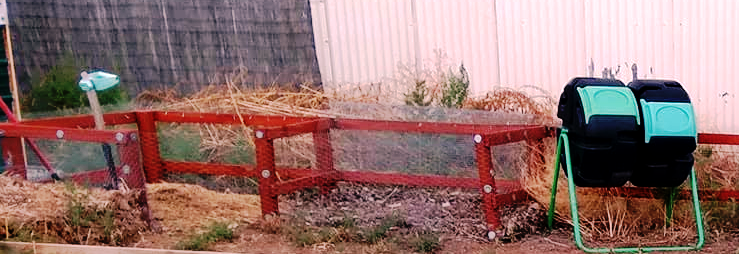
Moving out of the apartment and onto my own land has enabled me to create an alternative to a traditional three-bin system ~ moisture and ventilation matter more in the desert. For the past 5 or so years, I have been using 4 x 4 x 2 ft. bins made out of pressure-treated posts and chicken wire. I avoid food scraps to prevent pests, composting them in a Dual Body Tumbling Composter instead.
check out my other Q&a pages!
More Q&A coming soon!
Animal Care: Tips for raising poultry, gamebirds, rabbits, and more.Homesteading Skills & DIYFood Preservation & StorageSeasonal Homesteading & PlanningUrban & Suburban HomesteadingHealth & Wellness in HomesteadingHomesteading Economics & Bartering